What Is a Dental Crown? Types, Procedure, and How Long They Last
Learn what a dental crown is, its different types, treatment procedure, cost factors, and how long crowns last. Explore modern dental crown options in Kolkata.
The knowledge of dental crowns comes to most people just in that instance when their dentists tell them that they require dental crowns. At once, a barrage of questions pops up in their mind before they can finish telling them. What is it all about? How long will it last? Do I need it now? etc.
So, let us take up each question one by one in this blog.
What is a dental crown?
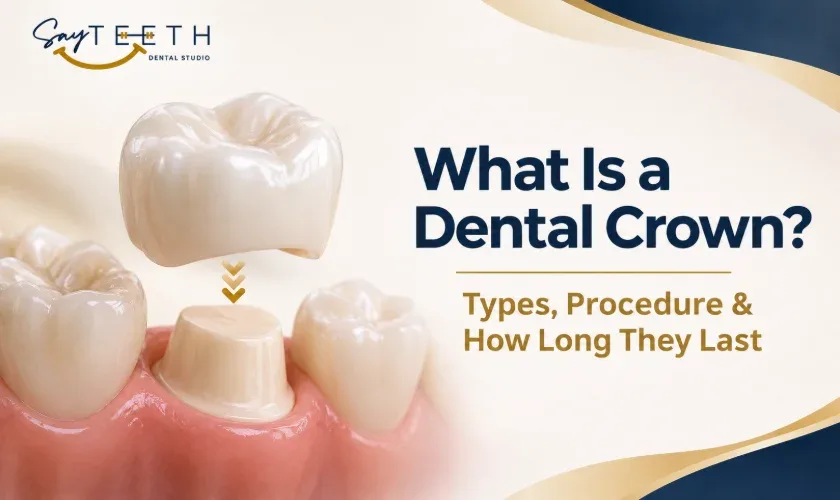
A dental crown is an artificial cover that can be used to fit on top of a broken or weakened tooth to make it whole and strong. After fitting, it completely covers the top part of the tooth. It works the same way as your real teeth do once it is put on. You will need this if your tooth is damaged to such an extent that a filling cannot be performed – big crack, severe damage, decay, or wear caused by teeth grinding.
What Are the Types of Dental Crowns?
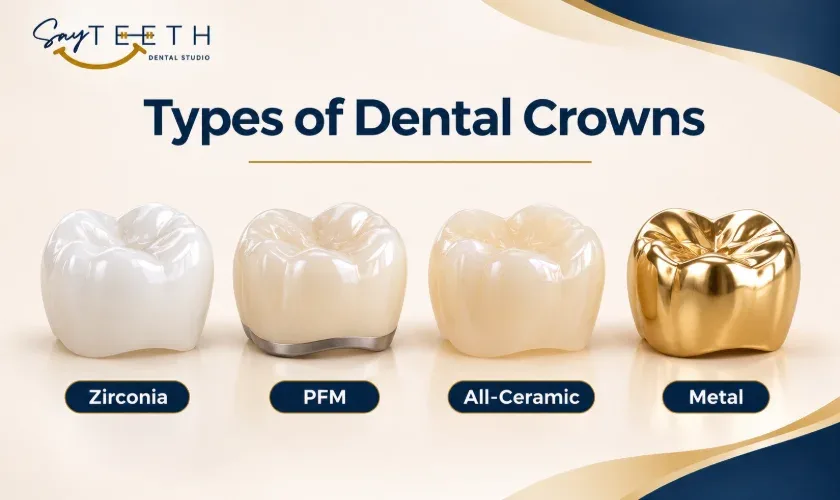
Walk into any decent dental clinic today, and you will find that there are various types of dental crowns depending on the material and their use. So, let's find out the types available in modern dentistry.
Zirconia crowns: Zirconia crowns are one of the leading dental crowns in dental clinics because they're made from zirconia; this makes these crowns so strong that they can withstand all the chewing pressure & will not dislodge or chip off. They have excellent compressive strength. The best part of these crowns is that they look completely natural and don't cause discolouration in the gingiva that our conventional metal-based crowns can cause over time. An advantageous part of zirconia is that it solves both problems in back teeth, where the most biting load is given; it offers excellent strength there, and for the front teeth, the aesthetic appearance of the teeth matters, so because it matches the natural shade, it solves this issue too; overall, zirconia crowns are a great choice nowadays for dentists.
Porcelain-fused-to-metal (PFM) crowns: These caps have been standardized for a very long time in dentistry and are still in use in many areas because of their high strength due to the metal core + the ceramic outer layer for the appearance of the tooth. The only limitation with these crowns is that, over time, when the gums start receding with age, the metal gets exposed, and this appearance of the metal is not liked by the patients sometimes because it ruins the aesthetics of their teeth, with a grey, blackish line appearing; but no doubt, due to the durability & high quality of these crowns, it also stands out in terms of aesthetics.
All-ceramic crowns: These artificial teeth prioritise aesthetics above everything else. They look the most natural of any material, with no metal underneath. Now that people are getting more conscious about their front teeth and how their smile looks, these crowns are perfectly suited for such people. But there's a limitation to heavy chewing compared to the rest of the crowns. So, if you want caps only for front teeth where how they look matters more than how much load they can take, the all-ceramic ones are the best option available.
Metal crowns: These are the crowns that are made up of various metal alloys like gold, cobalt-chromium, etc. These types are rarely chosen today as they are not aesthetic, but they still are highly durable. They cause minimal wear on the opposing teeth and last for an exceptionally long time. Some dentists still recommend them for back molars in patients who grind heavily, where longevity is the priority and the tooth isn't visible.
How Long Do Dental Crowns Last?
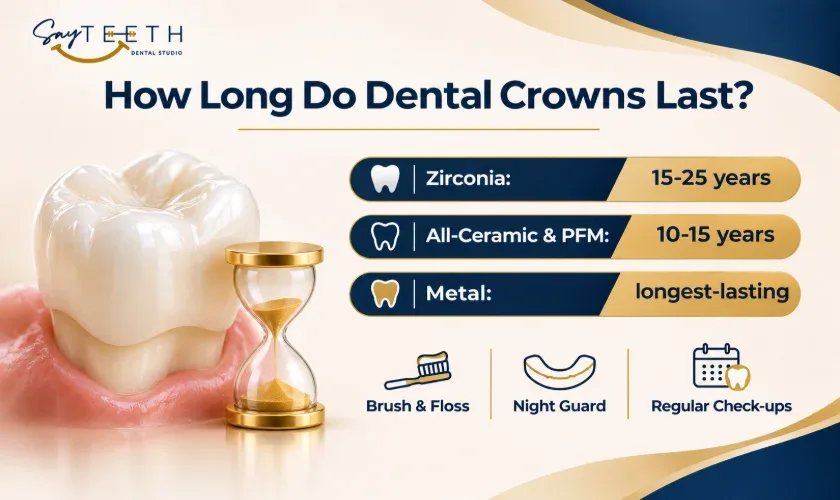
The honest answer is that it depends on both the material and what happens after these are placed.
Zirconia, if placed well and maintained properly, lasts fifteen to twenty-five years. All-ceramic crowns last for ten to fifteen years on average. PFM last a similar range. Metal crowns, when placed on back teeth in patients who look after them, can outlast everything else.
It is the conditions that one creates at home that contribute greatly to the shorter life of the crown cover. Grinding the teeth at night without a night guard exerts great pressure on the tooth crown, causing significant wear. The most common cause of failure of the tooth crown earlier than expected is the formation of decay at the margins or edges where the crown covers the tooth, and this occurs due to poor oral hygiene of the gums of the covered tooth.
The dentist's job is to place the caps correctly. Everything after that, like how the area is cleaned daily, whether a night guard is worn when needed, and whether regular check-ups are happening, determines how long it lasts.
How Many Sittings Does a Dental Crown Take?
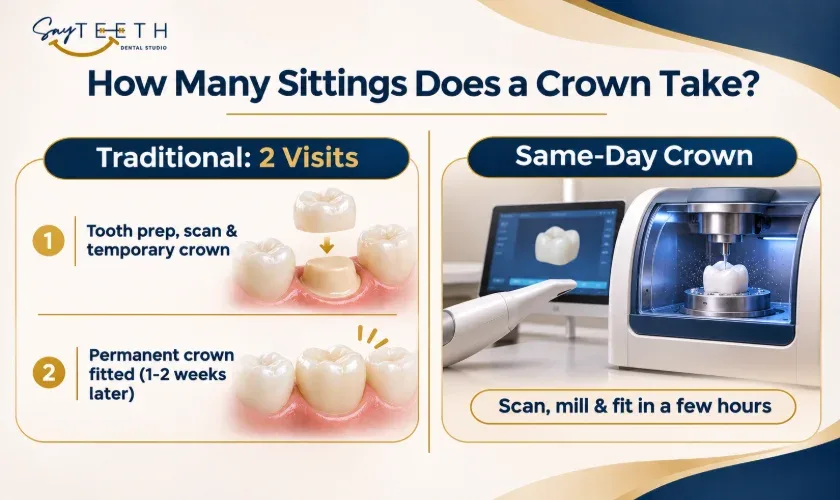
Traditionally, to place a dental crown, a dentist requires two appointments. The first involves preparation of the tooth for the cover placement, taking an impression or digital scan, and placing a temporary one while the permanent one is made in a laboratory. The second appointment involves fitting the permanent artificial tooth on the prepared tooth with cement. There will be a gap of around one to two weeks between the appointment and the fabrication of permanent teeth.
At advanced dental clinics with in-house laboratories and CAD/CAM milling technology, same-day crowns are now possible for a few cases. The tooth is prepared, scanned digitally, and the permanent crown is milled from a zirconia or ceramic block on the same day within a couple of hours. But these can be done for only a few suitable cases.
The permanent dental crown is secured using a specialised dental luting cement to ensure a strong and reliable bond between the crown and the prepared tooth. Dual-curing resin-based composite adhesive luting cement, such as Pyrax Dental's Dual Curing Resin Based Composite Adhesive Luting Cement, is one of the materials used in adhesive cementation procedures, depending on the crown material and clinical requirements. The choice of cement plays an important role in achieving proper retention and long-term stability of the restoration.
The Bottom Line
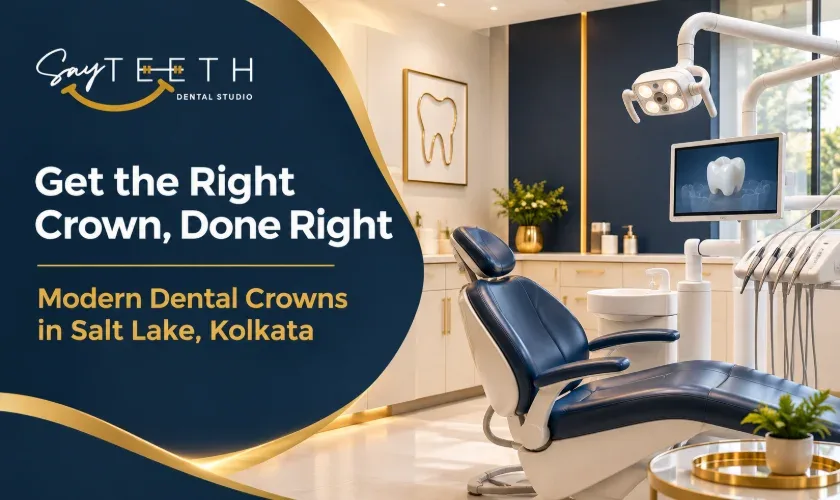
A tooth prosthesis is what a tooth needs when damage has gone past the point that simpler treatments like fillings, etc can not fix it. The choice of material is a very important factor when deciding what prosthesis is suitable for your particular case. The number of appointments depends on what technology your dental crown clinic in Salt Lake Kolkata is using. And how long it actually lasts depends on how well the endodontist places the crown and how well you maintain it afterwards. So, get the treatment done at the best dental clinic -Say Teeth Dental Studio that uses proper materials and modern technology, and maintain your artificial tooth regularly after it is placed.
Have questions about your dental health?
Request an appointment at Say Teeth Dental Studio and we will call you to confirm.