Dental Crowns and Bridges Treatment in Salt Lake, Kolkata
Damaged teeth can cause you pain and also make you lose confidence. Fortunately, modern Prosthetics can be used to replace your teeth to give them their original look, feel and function.
We offer bespoke Prosthetics at Say Teeth Dental Studio, Salt Lake in Kolkata, to help you fix broken teeth and replace lost teeth with natural-looking replacements.
We can help protect your teeth after root canal therapy by repairing damaged teeth or replacing one or more missing teeth. We’ll help advise you on the best options for you.

What Are Dental Prosthetics?
Dental prosthetics such as crowns or bridges can permanently fix broken or missing teeth. It is a stable solution for your smile, as it also fixes your bite and any possible future oral complications.
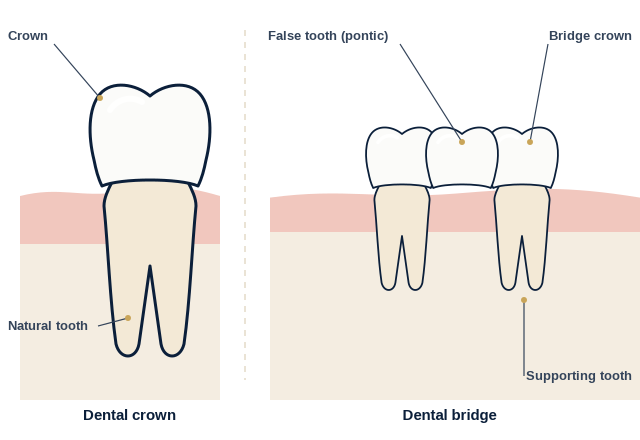
What Is a Dental Bridge and How Can It Help You?
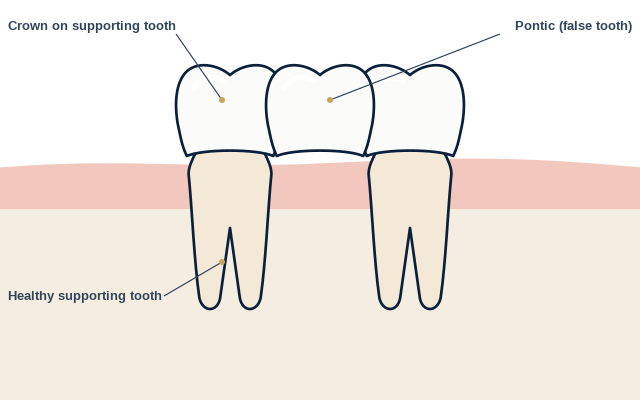
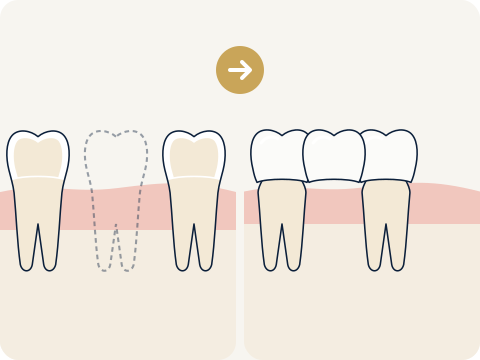
A bridge is placed in the gap where the tooth is missing. The prosthetic is fixed to your healthy teeth or implants on either side of the gap to allow you to eat, talk and smile without any issues.
Dental Crowns
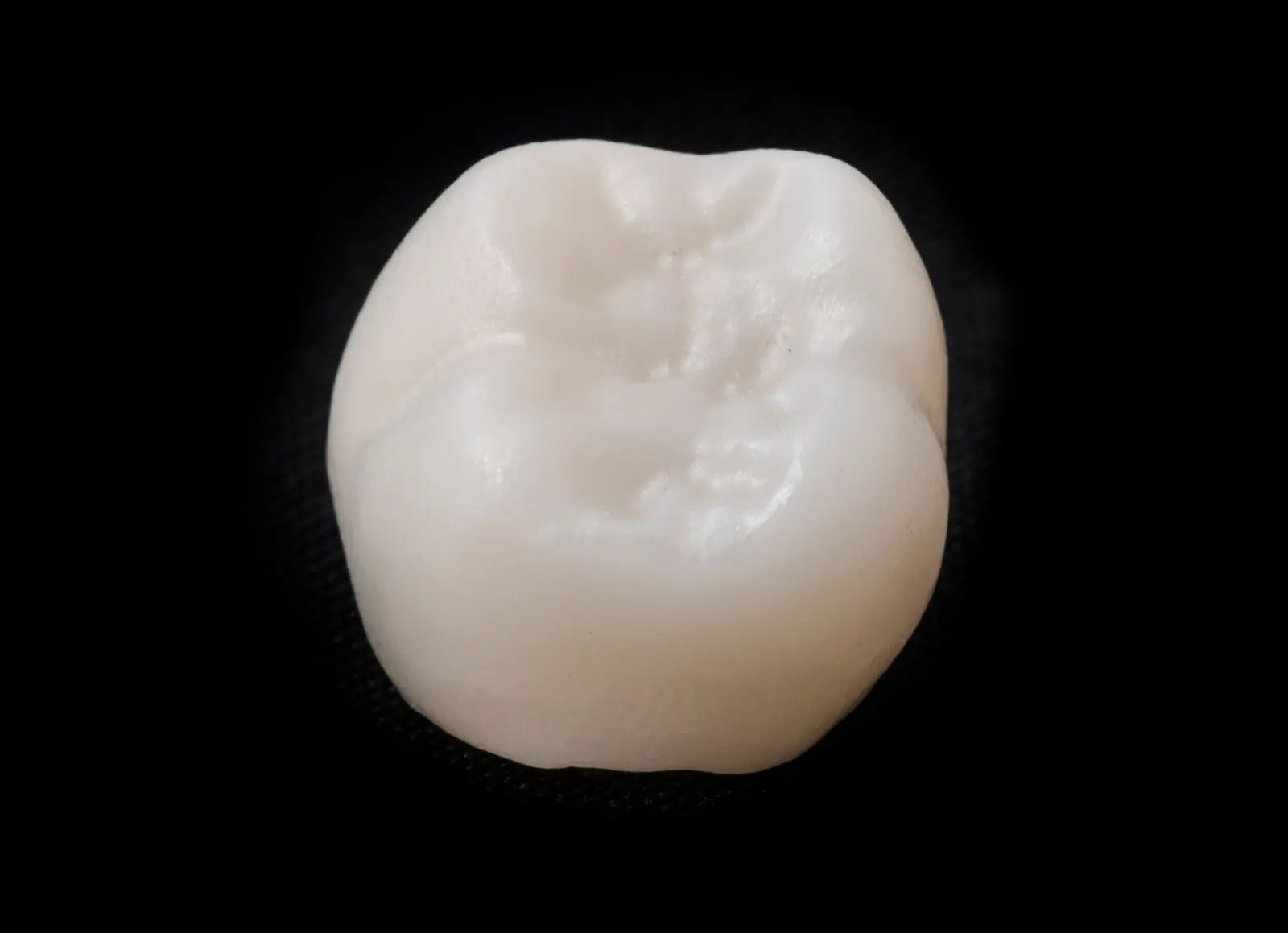
A crown is a bespoke cap that restores the shape, size, strength and appearance of a broken or weakened visible portion of your tooth.
You may be recommended a prosthetic cap if:
-
Your teeth are very broken down due to extensive decay.
-
There is damage to your teeth due to fracture or injury.
-
Your teeth have undergone root canal treatment.
-
Your teeth are worn down or heavily stained.
-
To support certain restorations.
Dental Bridges
It is a fixed restoration that replaces one or more missing teeth. The artificial teeth are joined together to form a prosthetic which is held in place by adjacent natural teeth or implants.
These prosthetics can be used to:
-
Replace missing teeth
-
Enable you to chew and bite
-
To improve your smile
-
Prevent adjacent teeth from moving into the gap
-
Provide support for improved speech and oral function.
When Do You Need Dental Prosthetics?
If any of the following is applicable, then you may benefit from Prosthetics:
-
When you have severe damage to your teeth. The remaining part of your tooth will need protecting when it is heavily decayed or damaged.
-
This can also be due to missing teeth. To enable you to eat, a bridge can be placed to replace your missing teeth.
-
Following Root Canal Treatment, you may require a prosthetic cap to protect your tooth. Depending on how many of your natural teeth you have.
-
A broken or cracked tooth is a major reason for seeking out prosthetics. Caps can be placed to restore and protect your fractured tooth.
-
Prosthetic caps can also help with wear and discolouration. In some instances, caps can be placed on very worn or damaged teeth to improve the shape, aesthetics and functionality.
-
Difficulty chewing can be eased with caps as well. If you have missing or broken teeth, you may have difficulty eating. Restorative treatments can help provide these functions.
Types of Dental Crowns Available
The appropriate prosthetic cap will be dependent upon a number of factors, including location in the mouth, aesthetics, occlusal forces and overall oral health.
-

1. Zirconia Crowns:
These prosthetic caps are manufactured from a strong ceramic material. They can be used in both anterior and posterior regions by dentists.
Advantages:
- Very strong and durable.
- Natural appearance.
- Applicable to many restorative situations.
- Resistant to everyday masticatory forces.
-
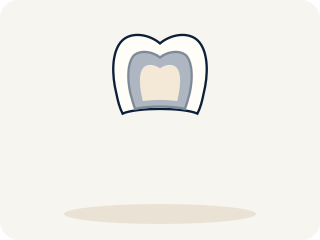
2. Porcelain Fused to Metal (PFM) Caps:
PFM caps are made of a metal core and a porcelain outer layer.
Advantages:
- Provides adequate strength.
- The outer layer is tooth-coloured.
- Suitable for a variety of restorative scenarios.
- Used frequently by dentists.
-

3. All-Ceramic Crowns:
These caps are made entirely out of ceramic materials and have a very natural appearance.
Advantages:
- Excellent aesthetic properties
- No metal used
- Suitable for specific front or visible teeth
- Very similar natural tooth colour.
-

4. Metal prosthetics:
These are made from alloys by metal prosthetics labs. They are appreciated for their strength and resistance to wear.
Advantages:
- High levels of durability.
- Often less tooth reduction is required.
- Suitable for certain posterior teeth.
- Resistant to chewing forces.
Types of Dental Bridges
The type you may be advised to have will depend on the position of the gap, the condition of the adjacent teeth and the overall health of your mouth.
-
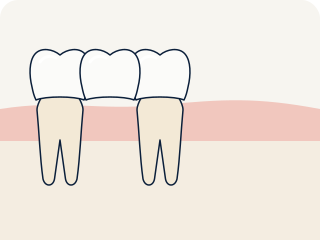
1. Traditional:
Prosthetics are placed onto the adjacent teeth to provide support for a false tooth.
-
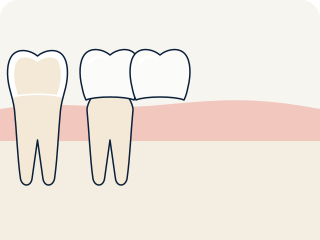
2. Cantilever:
This type can only be used in certain circumstances. Just one adjacent tooth is used to support the false tooth.
-
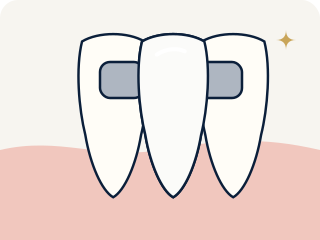
3. Maryland:
This involves attaching a framework (or wings) to the back of adjacent teeth to support the new tooth. This type of prosthetic can be used to replace some front teeth.
-
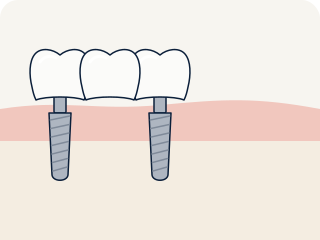
4. Implant-supported:
This is a prosthetic that is supported by implants.
We may suggest this option if there are multiple adjacent teeth missing and you have suitable bone and oral health.
Crowns vs Bridges: What Is the Difference?
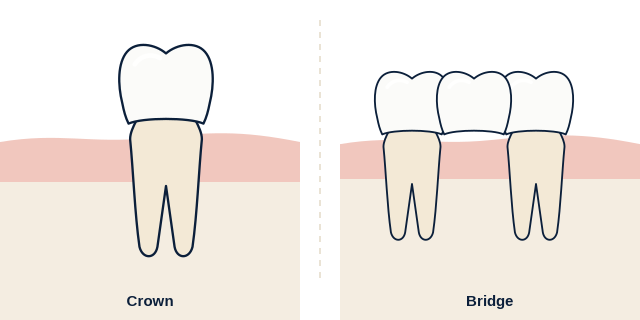
| Feature | Crown | Bridge |
|---|---|---|
| Primary purpose | Restore a damaged tooth | Replace missing teeth |
| Coverage | Covers an existing tooth | Fills a gap |
| Support | Existing tooth or implant | Natural teeth or implants |
| Main benefit | Protects and strengthens | Restores missing teeth |
| Application | Broken, weak or treated teeth | One or more missing teeth |
Prosthetics Treatment Procedure
We have an organised approach to ensure that your restoration is carefully planned and fitted.
-
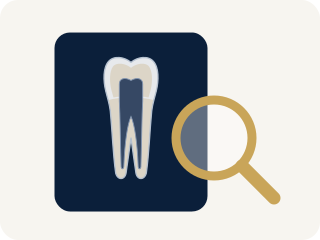
Step 1:
Your dentist will carry out an examination of your teeth and gums, bite and overall Oral health. You may also be advised to have an X-ray or diagnostic tests.
-

Step 2:
Your dentist will devise a treatment plan based on their examination of your teeth and recommend what material to have your prosthesis made from and the type of restoration.
-
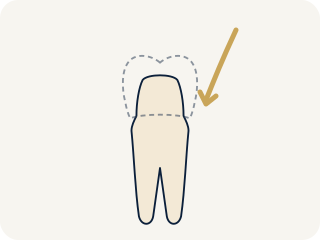
Step 3:
If you are having a traditional prosthetic cap or bridge, we may need to reshape your supporting teeth.
-
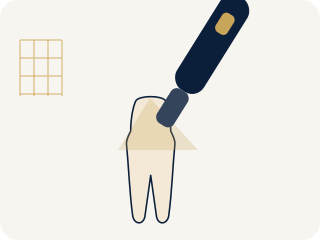
Step 4:
An impression or scan will be taken to allow the lab to make an exact replica of your teeth.
-
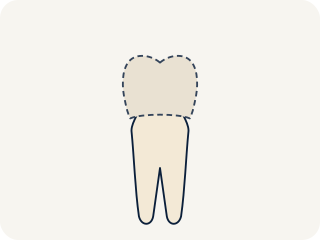
Step 5:
A temporary prosthetic may be fitted.
-
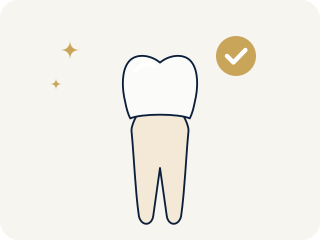
Step 6:
Once the prosthetic has arrived, it will be tried on to ensure it fits well, looks nice, and you have a comfortable bite. It will then be glued or screwed into place.
-
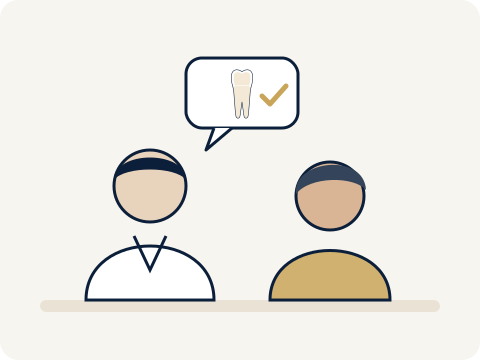
Step 7:
Your dentist will give you advice on how to care for your restoration and keep your mouth clean, plus when to attend any further appointments.
Benefits of Dental Prosthetics
Prosthetic treatments have many advantages, including:
-
Improved function:
Enables you to bite and chew properly.
-
Improved appearance:
Restores your teeth to their original shape.
-
Protective:
Protects your weak teeth.
-
Maintains alignment:
Stops neighbouring teeth from moving.
-
Improves speech:
Can improve any speech difficulties.
-
Personalised:
Each prosthetic will be bespoke to your anatomy.
-
Durable:
With proper care, prosthetics will last many years.
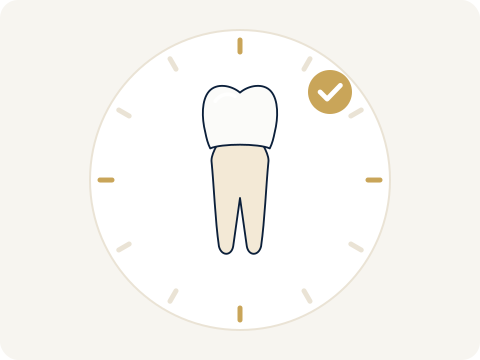
How Long Do Dental Prosthetics Last?
There are several factors that can affect how long your restoration will last:
- What material is used
- Oral hygiene
- Bite force and grinding
- Gum health and health of supportive teeth
- Regular visits
- Avoiding hard items
With correct care prosthetics implanted, it can often last between 5-15 years or more. This can vary between patients.
How to Care for Dental Prosthetics
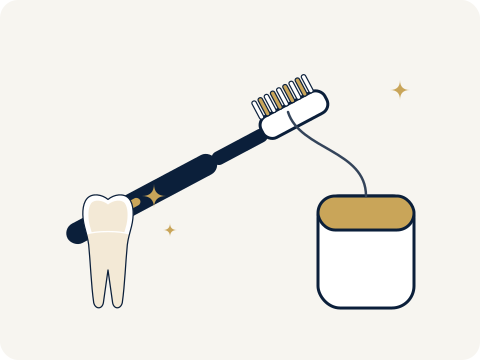
Maintaining good oral hygiene will help to protect your restorations.
- Brush with a soft-bristled brush twice daily.
- Floss or use interdental brushes.
- Floss threaders and special instruments can be used to clean.
- Do not bite down on very hard objects.
- Have regular check-ups.
- If there are any issues such as loosening, pain or bite changes, please contact your dentist.
Why Choose Say Teeth Dental Studio for Prosthetics in Salt Lake, Kolkata?
Choosing the right clinic is key when you need restorative treatments. We take a personal approach to your treatment in our Salt Lake Clinic.
What to expect:

-
Detailed assessment and discussion of your options.
-
Treatment is planned around you for Prosthetics.
-
A range of restorative materials are available.
-
Natural-looking results are a priority.
-
Careful attention is paid to making sure everything fits comfortably and bites correctly.
-
You will be guided throughout your treatment and aftercare.
-
Everything is provided in one place.
We aim to help restore your function and smile with appropriate restorations.
Cost of Prosthetics in Salt Lake, Kolkata
There are several factors that may affect the cost of Prosthetics:
- The type of prosthetic.
- How many teeth need restoring.
- The complexity of your case.
- Additional treatments required.
- Laboratory requirements and restoration requirements.
Prices may vary between zirconia, PFM, and all-ceramic restorations.
Frequently Asked Questions (FAQs)
Book Your Prosthetics Consultation in Salt Lake, Kolkata
Don’t let damaged teeth or missing teeth impact your quality of life. Our Salt Lake clinic in Kolkata can help you restore your smile with custom Prosthetics. We’ll inform you of the best option for you, whether it's a crown to strengthen a damaged tooth or a bridge to replace missing teeth.
Book your consultation today!